



The Faculty of Innovation Engineering of Macau University of Science and Technology held the fifth session of its 2026 Distinguished Lecture Series on 5 November 2026. The lecture featured Professor Fei Yue Wang from the Department of Engineering Sciences, who delivered a keynote presentation entitled “Agentic Control and Organizational Intelligence: The New Frontier for Knowledge Automation in the Post-AI Era.” The lecture explored emerging trends in artificial intelligence, innovations in organizational intelligence, the knowledge automation industry, and future social governance systems.
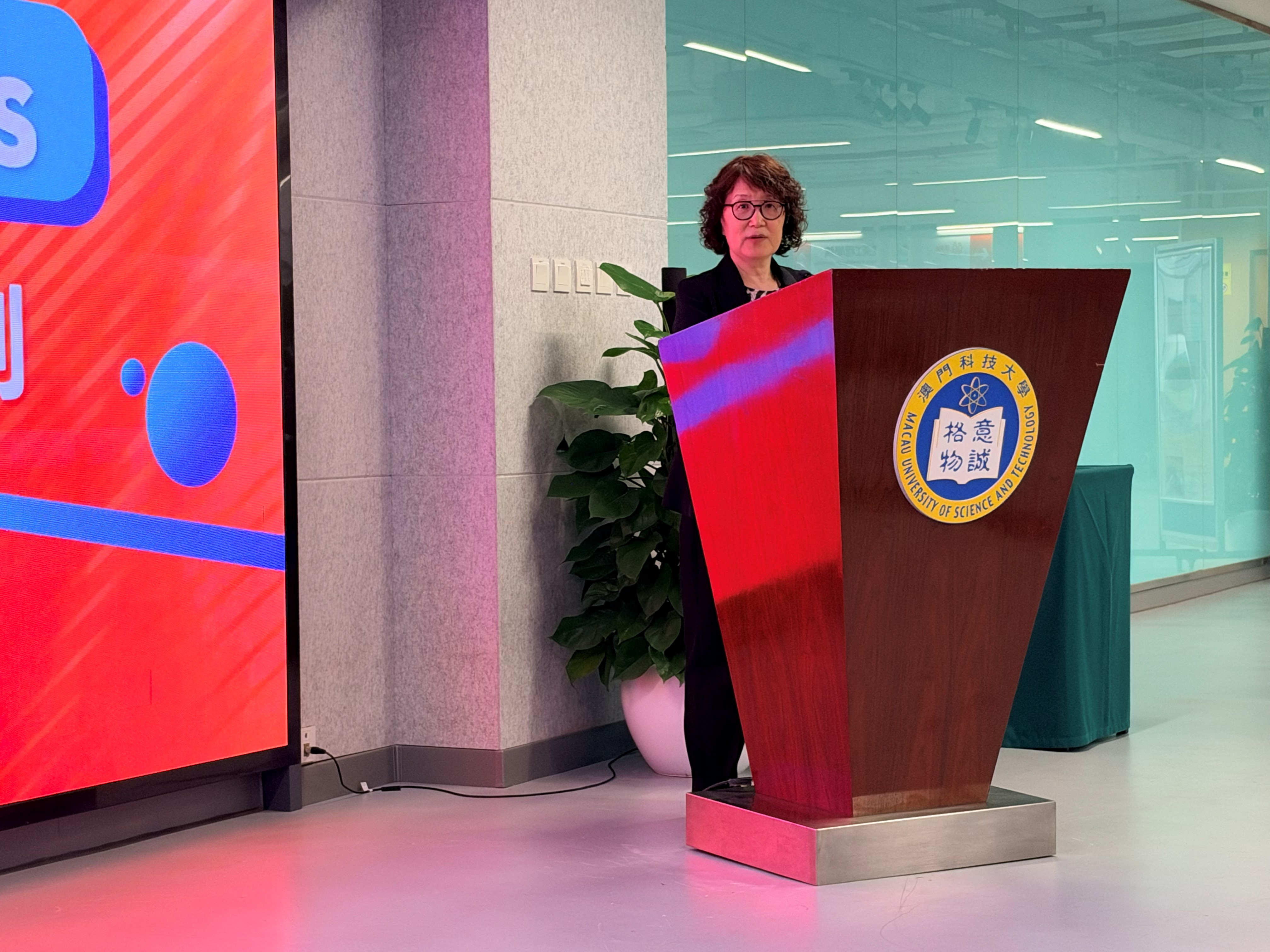
Dean Sun Qiao presides over the lecture
Professor Wang noted that society is gradually entering the “Post-AI Era,” where the development of artificial intelligence is evolving from traditional Automatic Control to Agentic Control. This transition marks a shift from industrial automation to knowledge automation and further drives the emergence of Organizational Intelligence. He emphasized that the key challenge for future AI development lies not only in technological breakthroughs but also in establishing governable, trustworthy, and socially responsible intelligent systems that balance safety and development.
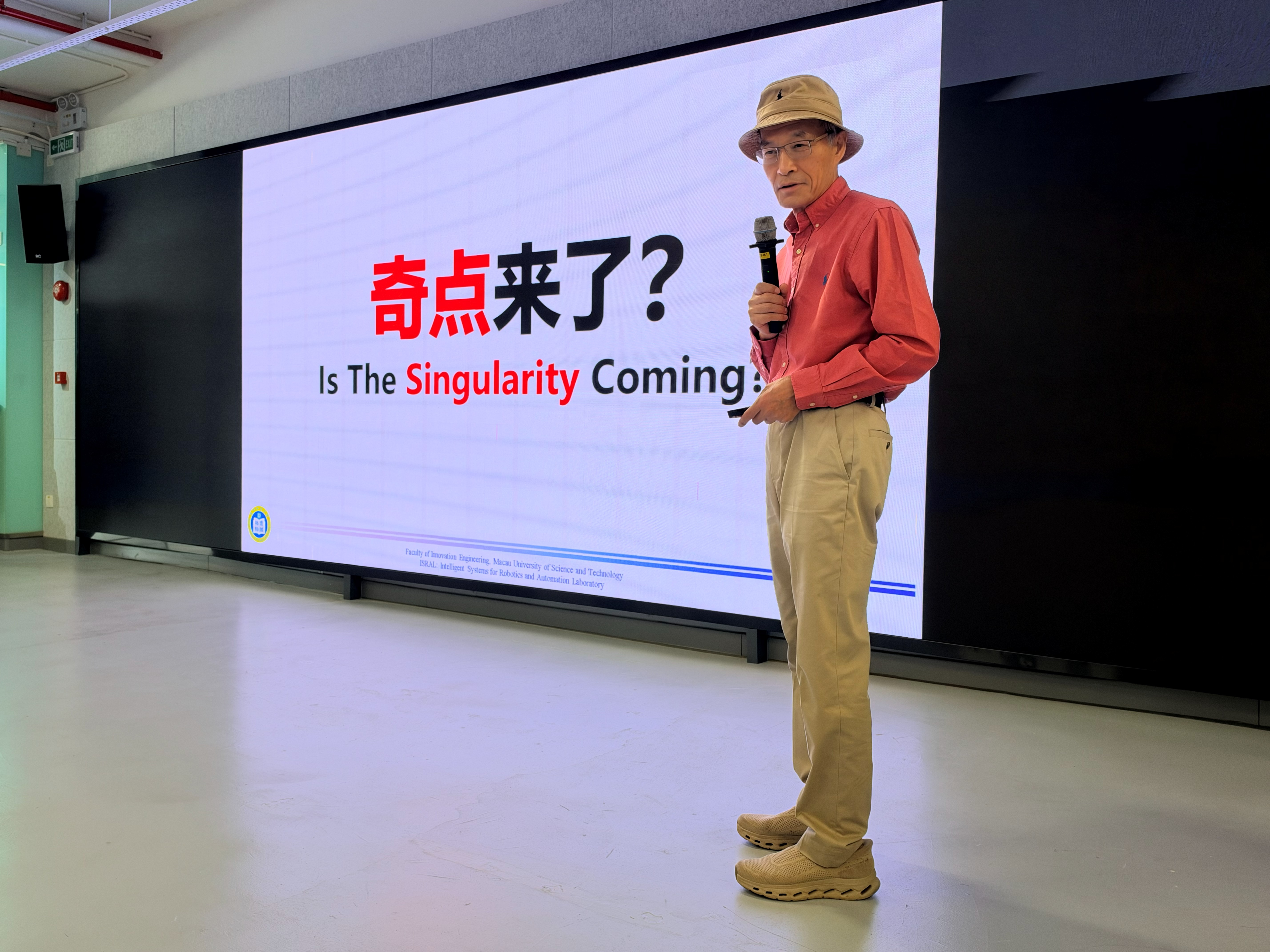
Professor Fei-Yue Wang delivers his keynote presentation
During the lecture, Professor Wang introduced the concept of “Pascal’s New Wager,” emphasizing that “intelligence may not be explainable, but it can and must be governed.” He called on academia, industry, and society to jointly establish effective AI governance mechanisms to address the social challenges and potential risks arising from the widespread adoption of intelligent technologies. He also analyzed the phenomenon of the “Big AI Trap,” highlighting concerns related to resource concentration, capability disparities, and structural societal transformations that AI may bring.
Addressing organizational innovation, Professor Wang proposed new organizational models, including the Rule-of-Law Industry and the Contract Factory. He suggested that future organizations will integrate next-generation digital technologies such as blockchain, smart contracts, decentralized autonomous organizations (DAOs), and knowledge robots, accelerating the transformation from traditional enterprises to intelligent collaborative organizations. He further remarked that in the era of knowledge automation, “future products will no longer be merely products,” and concepts such as “products as organizations” and “papers as organizations” will become defining characteristics of emerging organizational forms.
Regarding technological development and academic advancement, Professor Wang reviewed the development of intelligent science and systems at Macau University of Science and Technology, including the establishment of the first doctoral program in Intelligent Science and Systems, the development of master's programs in intelligent technologies, and joint laboratory collaborations with the Chinese Academy of Sciences. He noted that the University has developed distinctive strengths in intelligent science, parallel intelligence, intelligent blockchain, multi-agent systems, digital twins, and intelligent education, nurturing a large number of innovative talents for the future intelligent industry.
The lecture also showcased the theory of parallel intelligence and its innovative applications across a wide range of fields, including intelligent transportation, healthcare, rehabilitation, agriculture, tourism, education, the low-altitude economy, and knowledge publishing. By integrating artificial intelligence, large models, multi-agent systems, digital twins, and intelligent blockchain technologies, these studies promote the co-evolution of physical and virtual worlds and provide new pathways toward a smarter, more efficient, and sustainability future society.
Looking ahead, Professor Wang proposed advancing from Systems Intelligence to sustainability Intelligence and building a new intelligent ecosystem that integrates technological innovation, social value, and human well-being. He stressed that in the age of knowledge automation, trust and attention will become critical resources in the intelligent economy, while organizational intelligence, knowledge robots, and new forms of digital organizations will profoundly reshape the ways humans produce, collaborate, and innovate.
The lecture attracted enthusiastic participation from faculty members and students of Macau University of Science and Technology. Attendees commented that the presentation offered forward-looking insights into the future trajectory of artificial intelligence while providing new perspectives on organizational innovation, knowledge governance, and industrial upgrading in the Post-AI Era. Participants noted that the lecture offered valuable inspiration for advancing artificial intelligence and innovation-driven technology development in Macao and the Guangdong-Hong Kong-Macao Greater Bay Area.

