


The Faculty of Innovation Engineering of Macau University of Science and Technology held the fourth session of its Distinguished Lecture Series for the 2026/27 academic year on October 22, 2026. Featuring Assistant Professor Tian Jinyu as the keynote speaker. Delivering a lecture entitled “From Technical Principles to Cognitive Capability: Rethinking and Reconstructing Learning Approaches in the Era of Large Language Models,” he explored the profound impact of artificial intelligence, particularly large language models, on education and learning paradigms.
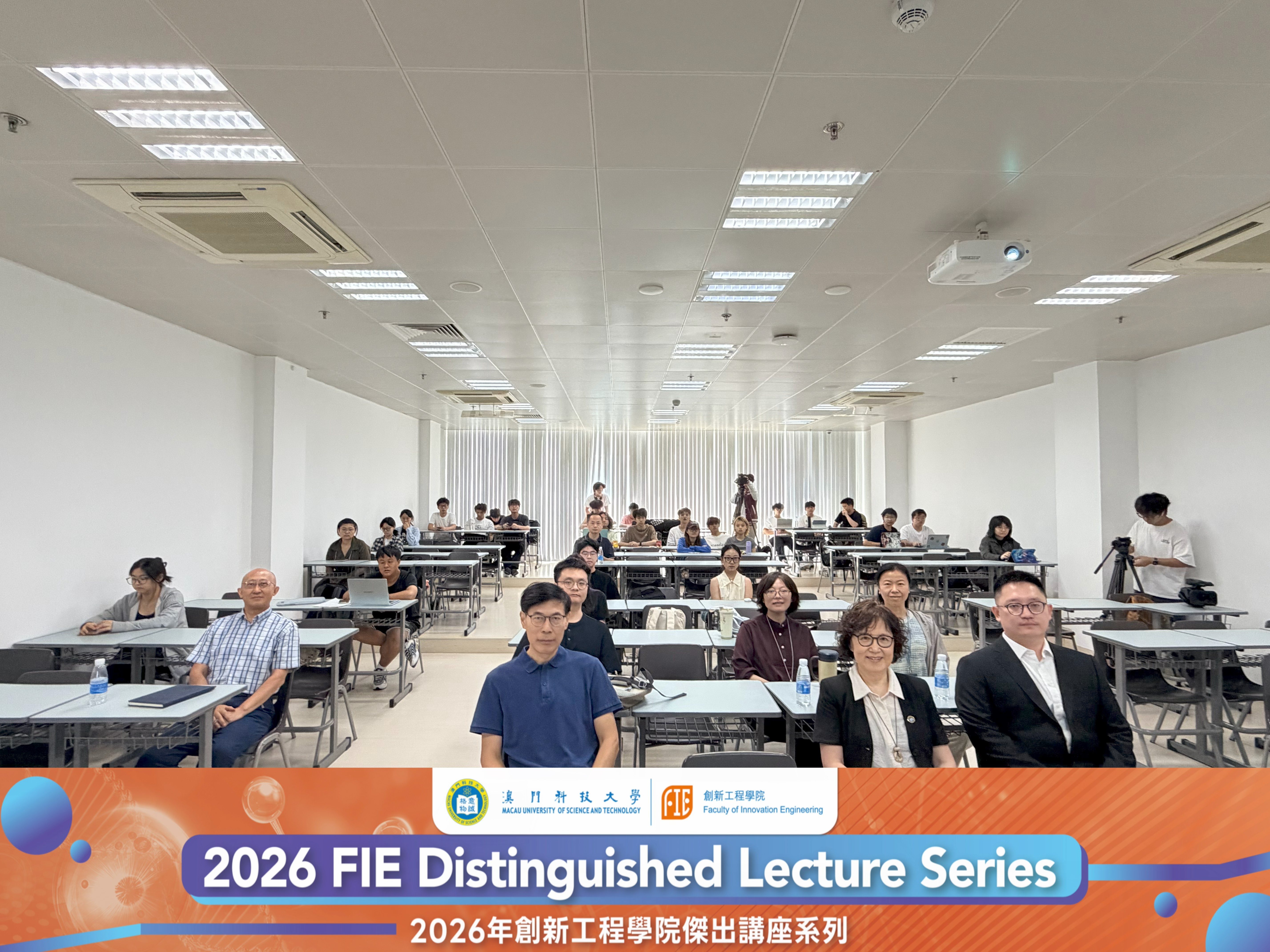
Group photo of participants
The lecture began with an introduction to the fundamental principles of large language models, explaining how they learn patterns of human language through vast amounts of data and demonstrate powerful cognitive capabilities. Assistant Professor Tian Jinyu noted that generative artificial intelligence is transforming knowledge acquisition, information processing, and learning methods. However, he emphasized that educators should focus on leveraging AI to cultivate students’ critical thinking, judgment, and creativity, rather than relying on AI merely to complete tasks.
During the sharing session, Assistant Professor Tian Jinyu reviewed findings from multiple international studies and analyzed the impact of generative AI on learning outcomes. He pointed out that AI can enhance learning efficiency and support personalized learning. Nevertheless, excessive dependence on AI may weaken students’ memory, independent thinking, and critical analytical abilities. Therefore, the educational value of AI lies not in whether it is used, but in how it is used and integrated into teaching and learning design.
In addition, Assistant Professor Tian Jinyu introduced the “RBT-A” curriculum design framework, which combines the Revised Bloom’s Taxonomy with AI literacy to redesign curriculum content, learning activities, and assessment methods. He believes that, in the age of AI, educators should devote more classroom time to developing students’ reasoning, analytical, evaluative, reflective, and innovative capabilities. He also advocated clearly distinguishing between learning tasks that should be completed independently by students and those that are suitable for human-AI collaboration, thereby enhancing learning effectiveness and future competitiveness.
In his concluding remarks, Assistant Professor Tian Jinyu stated that educational reform in the era of artificial intelligence is not about overturning existing educational goals, but rather about returning to the core values of education. These include fostering students’ self-directed learning abilities, curiosity, creativity, and lifelong learning mindset, enabling artificial intelligence and human intelligence to complement each other and jointly advance the future development of education.
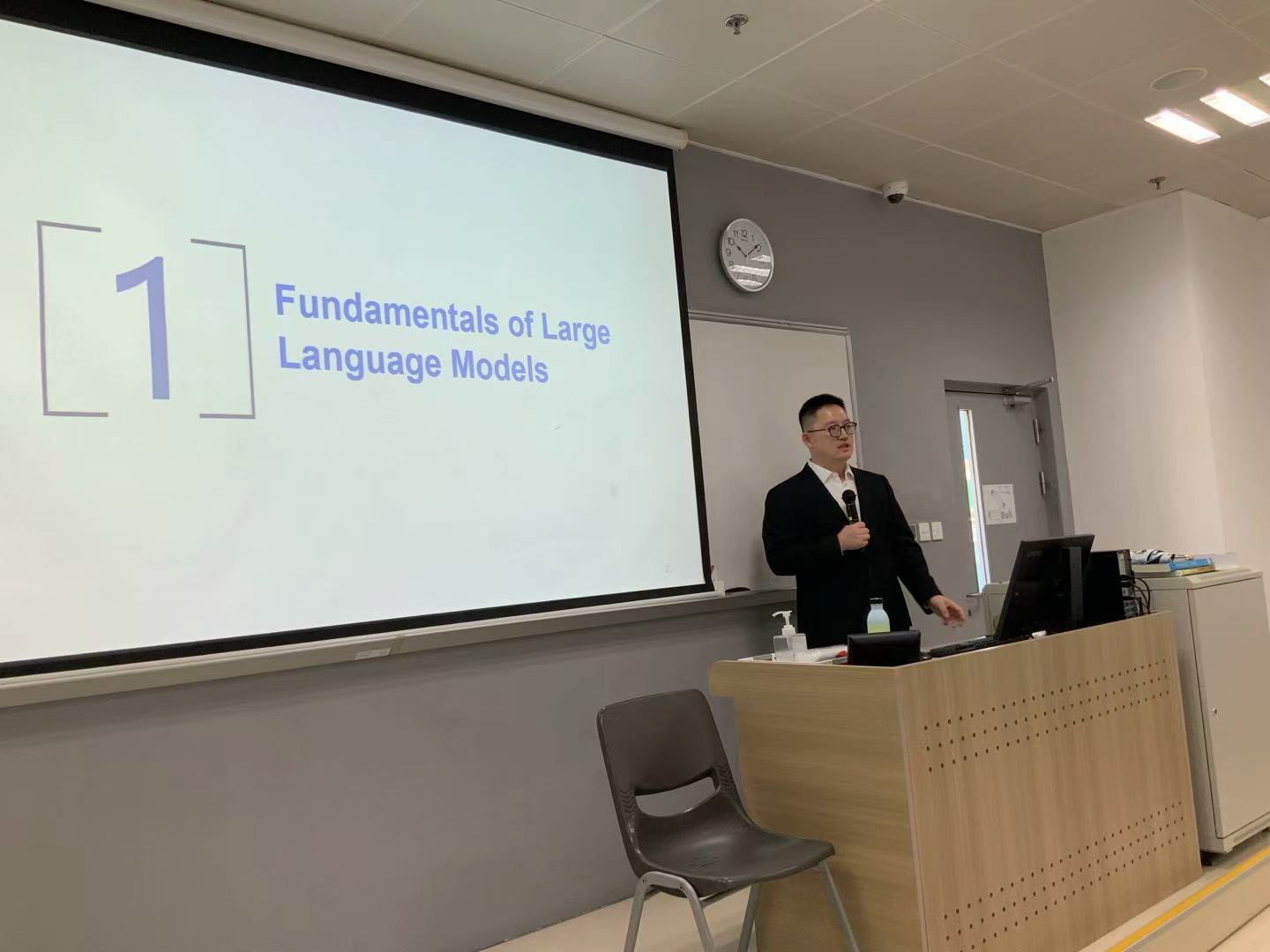
Assistant Professor Tian Jinyu delivering his lecture

