

Professor Qiao Sun, dean of the Faculty of Innovation Engineering at Macau University of Science and Technology (MUST), delivered a featured presentation in Beijing on September 1, 2026, at the International Symposium on Educational Intelligence for Agricultural Intelligence and Ecological Intelligence (IS–EI/AI/EI), a special session of the China-Brazil Innovation Cooperation Forum on Intelligent Science and Technology (FIST). Her talk, "Human-Centered Engineering Education in the Age of AI: Rethinking Engagement," examined how universities can keep people at the center of engineering education as artificial intelligence transforms learning and work. Held in a hybrid format, the symposium brought together experts from China and Brazil in intelligent science, automation and control, digital agriculture and engineering education.
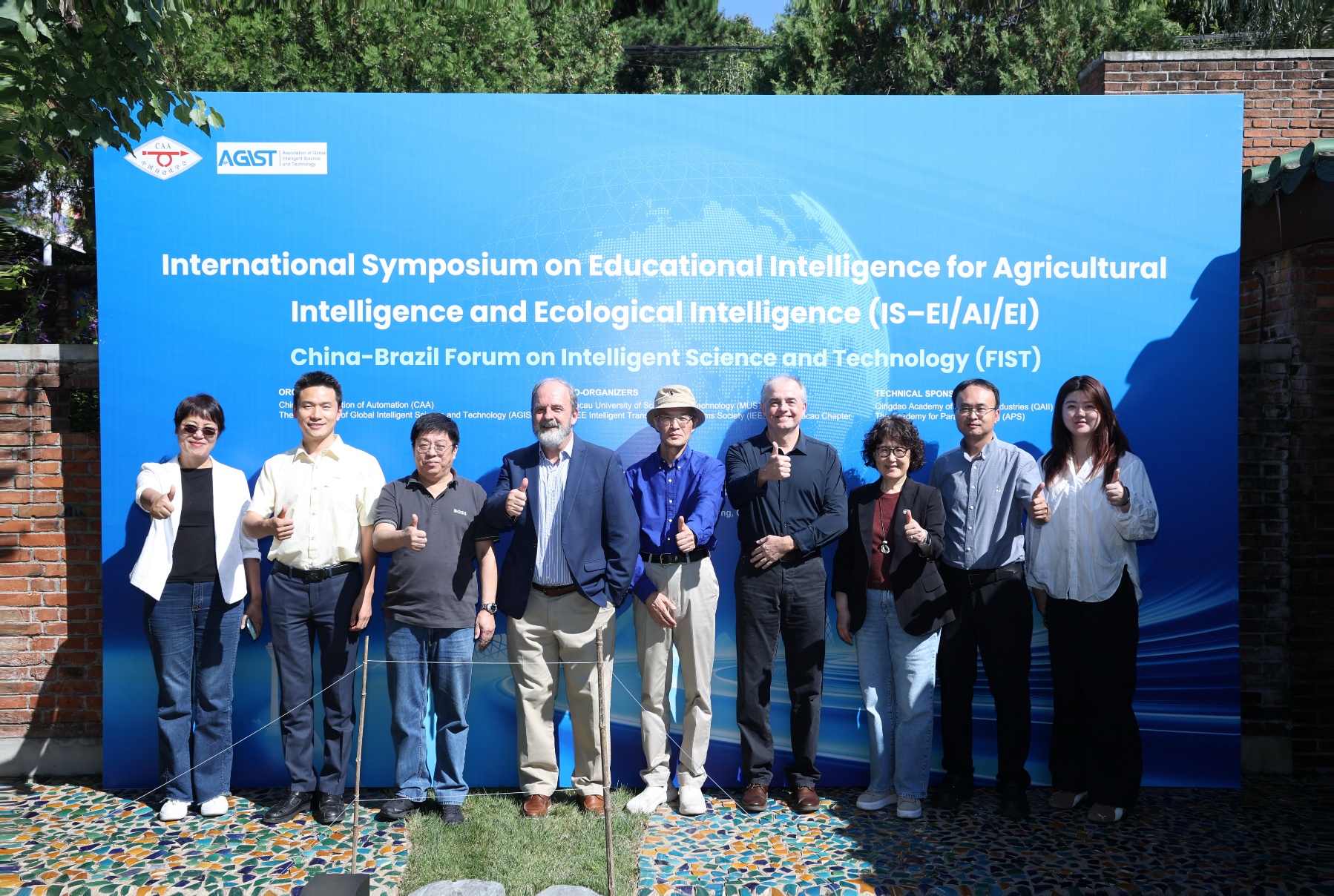
Professor Qiao Sun (third from right) with on-site participants at the symposium
FIST took place in Beijing from August 30 to September 2. Organized by the Chinese Association of Automation (CAA) and the Association of Global Intelligent Science and Technology (AGIST), the forum focused on frontier technologies, talent development, industry-academia collaboration and innovation ecosystems. It aimed to deepen exchanges among scientific societies, universities, research institutions and industry innovators in China and Brazil.
Among the Brazilian delegates were Professor Carlos Eduardo Pereira, a member of the Brazilian Academy of Engineering and a professor at the Federal University of Rio Grande do Sul (UFRGS), and Professor Alexandre Sanfelice Bazanella of UFRGS's Department of Automation and Energy. Pereira is chief scientist at the Center for Embedded Devices and Research in Digital Agriculture (CEDRA), a former president of the Brazilian Society of Automatics (SBA), a former Vice-President for Technical Activities at the International Federation of Automatic Control (IFAC), and a newly appointed IFAC Advisor, a lifetime distinction.
FIE Professor Fei-Yue Wang delivered the opening address on behalf of the Board of Supervisors at the Chinese Association of Automation, emphasizing the advances in intelligent science and technology, and the importance of cross-disciplinary collaboration and sustained international exchange.
In her presentation, Dean Sun began with the rapid rise of large language models and AI agents, exploring how they are changing the way knowledge is created, accessed and applied, and what that shift means for the core mission of universities and engineering education.
Future engineers, she said, will need more than technical expertise to confront challenges including clean water, clean energy, sustainable cities and climate action. Creativity, teamwork, communication, ethical responsibility and the capacity to adapt to changes are just as important.
Dean Sun outlined a human-centered framework built on three pillars: strong foundations, interdisciplinary integration and learning communities. Drawing on a summer program that combined physics and biology, she showed how interdisciplinary teaching can help students build confidence, a sense of belonging and a stronger engineering identity.
She also introduced the concept of "parallel learning," an adaptive learning ecosystem supported by digital counterparts, intelligent agents and data-driven feedback. The approach is designed to give students more personalized support, strengthen collaborative learning and enable continuous improvement in teaching without displacing the central role of educators.
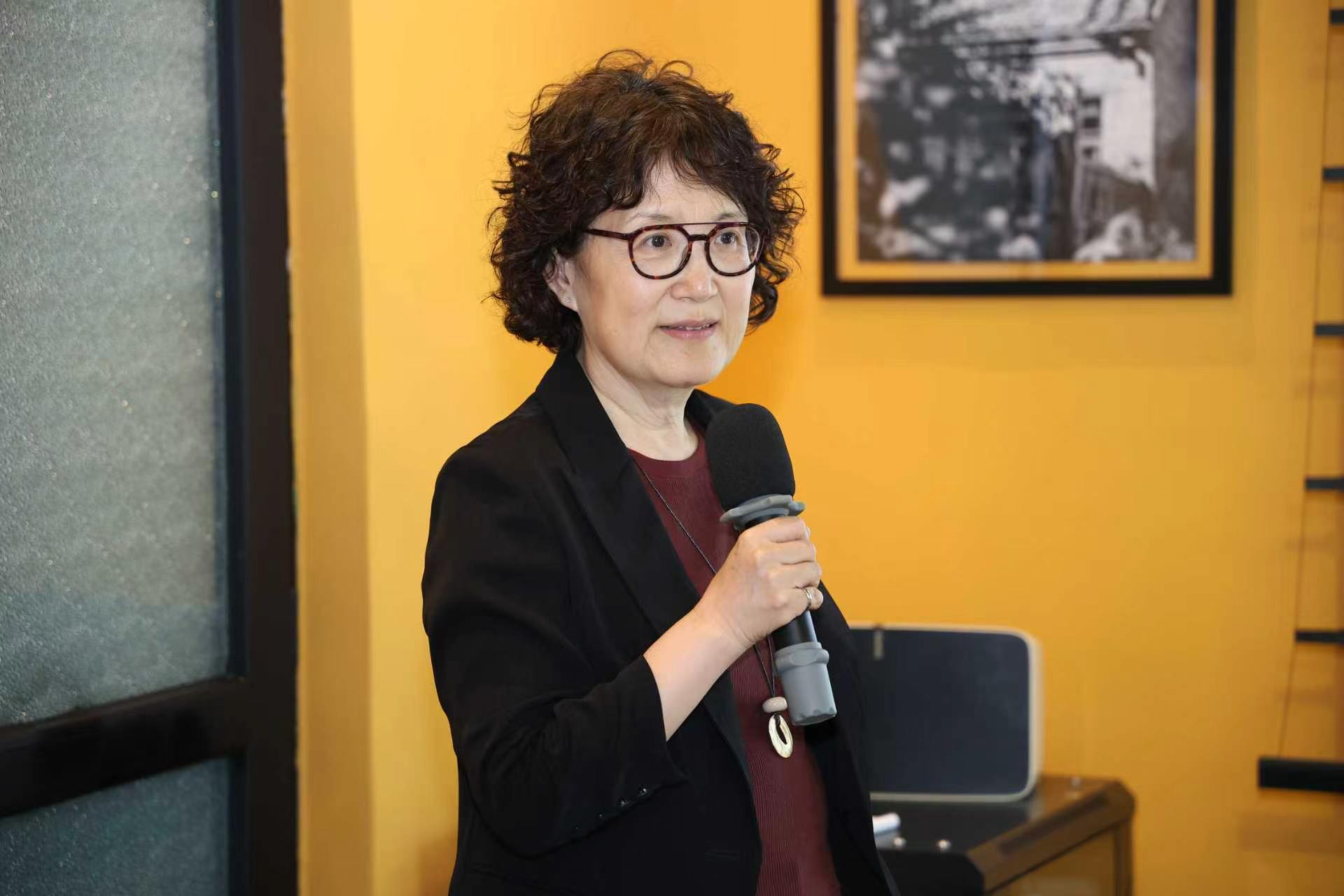
Professor Qiao Sun shares insights on human-centered engineering education
Other speakers included Prof. Carlos Eduardo Pereira; Derong Liu, dean of the School of Artificial Intelligence at Anhui University; Prof. Alexandre Sanfelice Bazanella; and Wenhao Su, a specially appointed researcher at the College of Engineering, China Agricultural University. Their presentations covered CEDRA's development and practice, AI-based self-learning control, classical and modern data-driven control, and the use of intelligent sensing for phenotypic analysis across the soybean life cycle and nondestructive quality assessment.
The symposium strengthened ties between MUST's Faculty of Innovation Engineering and universities, research institutions and academic organizations in China and Brazil, opening new avenues for collaboration in engineering education, interdisciplinary talent development and international research.

