

In its continued commitment to fostering interdisciplinary learning and research, and to cultivating future leaders in science and engineering with global perspectives, the Faculty of Innovation Engineering (FIE) at Macau University of Science and Technology (MUST) held the fourth lecture of its 2025 Fall Interdisciplinary Science and Engineering (ISE) Lecture Series. This session took place on Thursday, November 20, 2025 at the MUST LIU's Innovation and Technology Center. The lecture featured Distinguished Guest Professor Wang Jun, Macau Institute for Applied Research in Medicine and Health at MUST, who delivered a presentation titled "When Carbon-Based Life Goes Silicon."
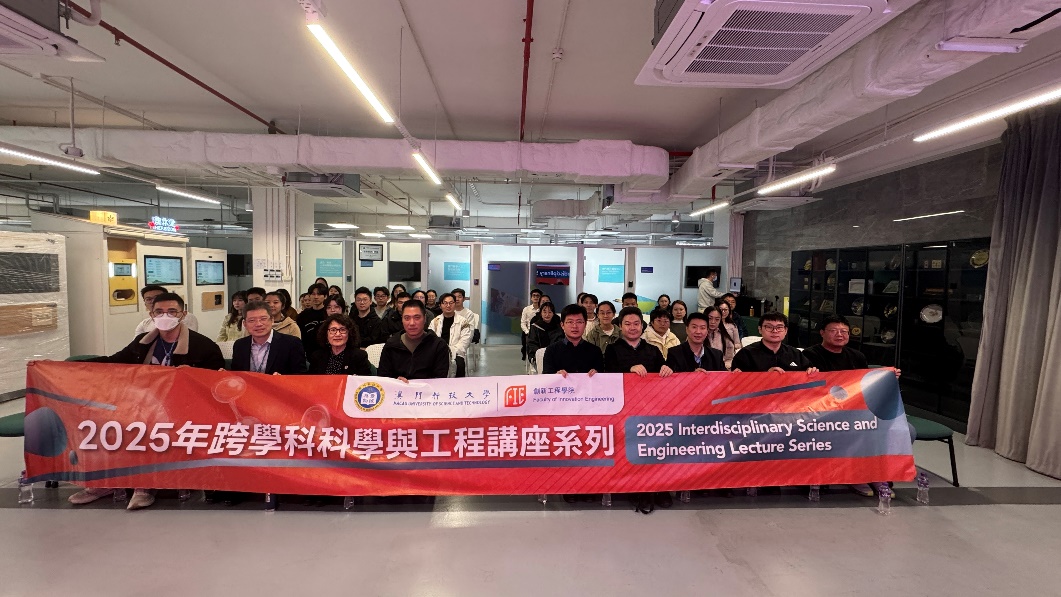
Group photo of participants
The lecture was organized by the FIE and attracted active participation from faculty, students, and researchers both within and outside the Faculty. The lecture was hosted by Professor Sun Qiao, Vice Dean of FIE. The attending guests included Professor Wu Qi Biao, Vice Dean of Faculty of Chinese Medicine, Associate Professor Li Jian Wei, and Assistant Professor Zeng Song Shan, Assistant Professor Liu Yi Ming, Assistant Professor Wu Hao, and Assistant Professor Cheong Weng Chon from Department of Materials Science and Engineering. In addition, FIE graduate students, postdoctoral researchers, and individuals interested in engineering science attended the lecture.
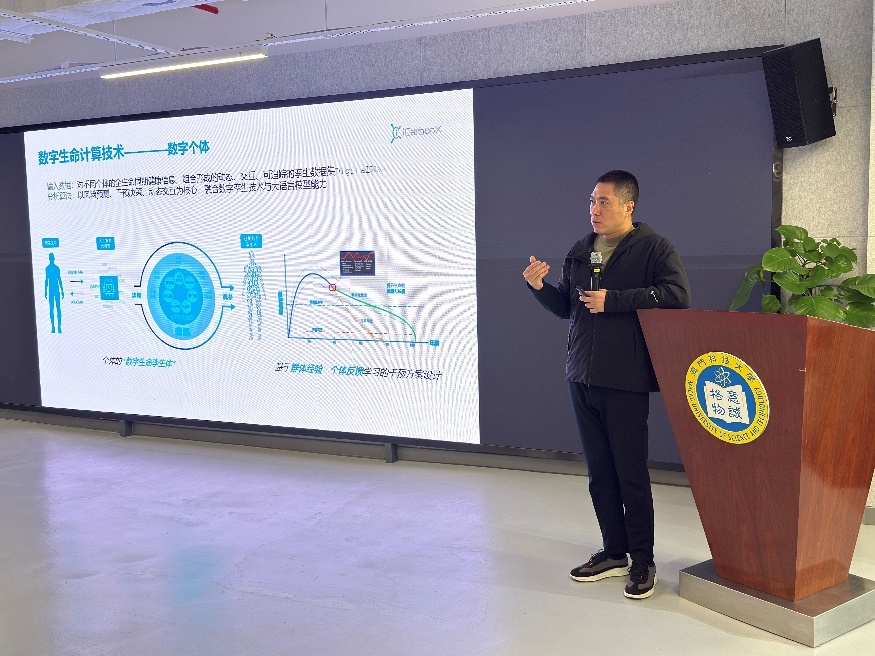
Distinguish Guest Professor Wang Jun was delivering the lecture
In the lecture, Professor Wang Jun started from the field of life sciences research is undergoing a paradigm shift. iCarbonX achieves high-throughput multi-omics detection of life data through its next-generation silicon-based bio-assembled chips (e.g., polypeptide chips and peptide nucleic acid chips). Combined with AI-driven computing platforms like large-scale models and multi-omics integration analysis, these innovations enable individual digital life twins. Core breakthroughs include: 1) Next-generation silicon-based chip technology that improves cost efficiency, reducing genome/proteome testing costs to RMB 100 range; 2) Chip-AI computational models that systematically profile personal health states while dramatically shortening drug development cycles and saving preclinical costs in innovative drug discovery. iCarbonX‘s transformative technologies will reconfigure pathways in the biomedical industry chain and establish a million-person pilot project for disease risk prediction and anti-aging management through full-lifecycle digital life systems. After addressing challenges in cost, ethics, and data security with digital life technologies, our carbon-based life forms will embrace a promising silicon-based future.
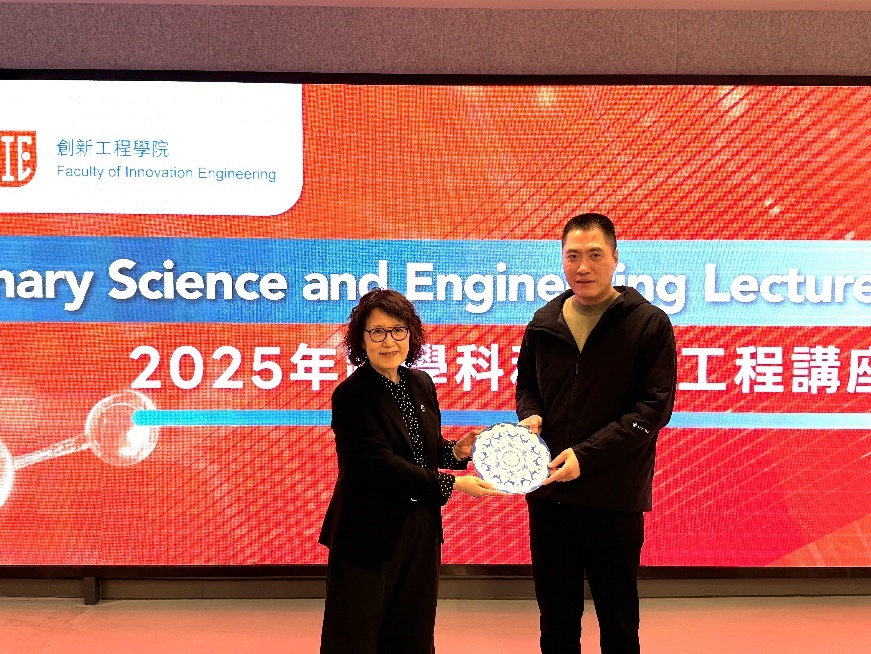
Professor Sun Qiao presented a souvenir to Professor Wang Jun
This lecture provided participants with a valuable opportunity to gain in-depth understanding of carbon-based life, further enriching the interdisciplinary knowledge and research perspectives of both faculty and students. FIE will continue to build high-level academic exchange platforms through its series of lectures, fostering interdisciplinary integration and advancing technological innovation.

